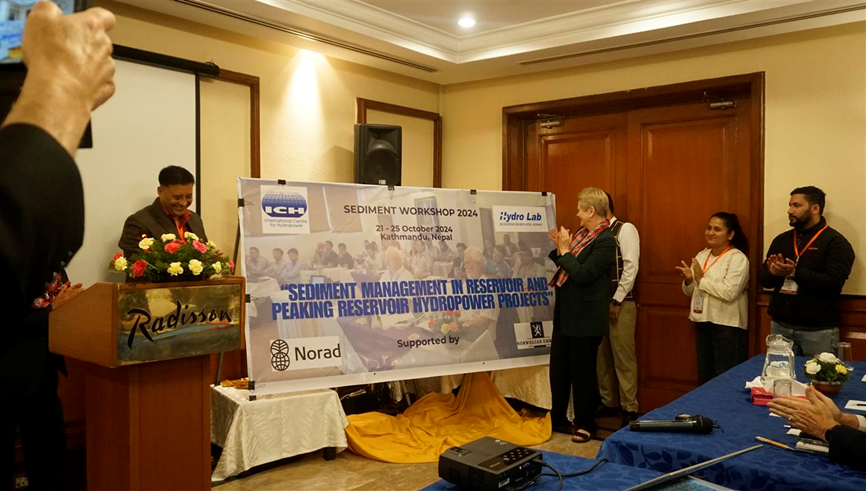
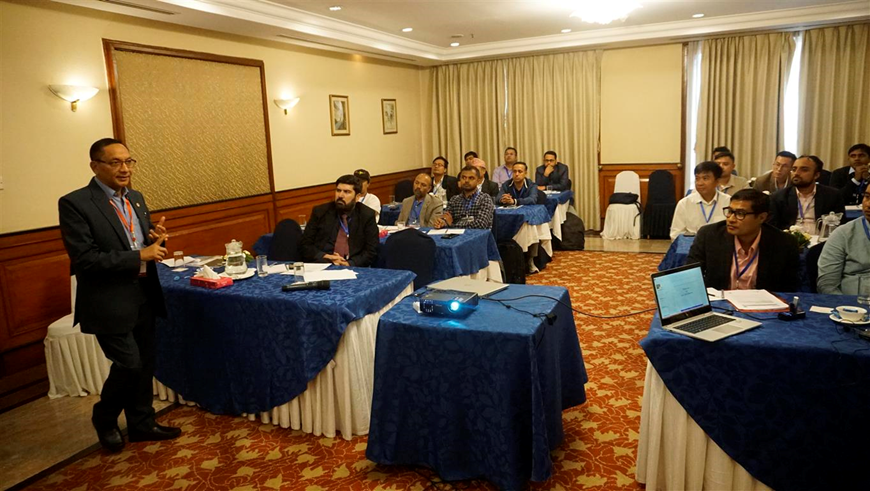
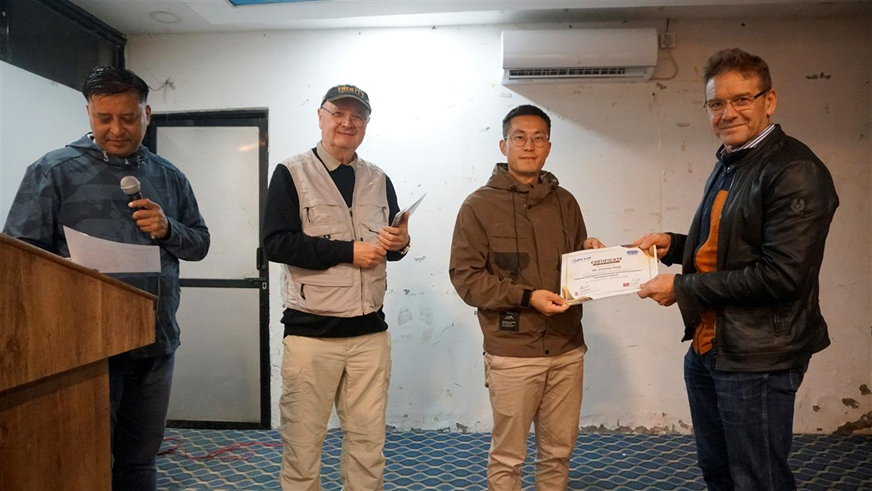
The International workshop jointly organised by Hydro Lab, Nepal and International Centre for Hydropower (ICH), Norway was successfully completed. The workshop was conducted from 21 – 25 October 2024. The opening session, chaired by Mr. Govinda Psd. Devkota, Board Director Hydro Lab, was started with the welcome speech from Dr. Meg B. Bishwakarma, General Manager, Hydro Lab. The programme was addressed by Mr. Tom Solberg, Project Director, ICH and the Chief guest, Ms. Torun Dramdal, Ambassador, Royal Norwegian Embassy. Finally, the opening session was completed with the key note lecture from Dr. Tom Jacobsen, Sedicon, Norway.
Sediment Workshop 2024
An international workshop with the theme “Sediment Management in Reservoir and Peaking Reservoir Hydropower Projects” was organised at Kathmandu, Nepal on 21 – 25 October 2024. The workshop was jointly organized by Hydro Lab, Nepal and International Centre for Hydropower (ICH), Norway. It was the 12th workshop in a series jointly organized by Hydro Lab and ICH since 2001, including one workshop at Chhukha, Bhutan.
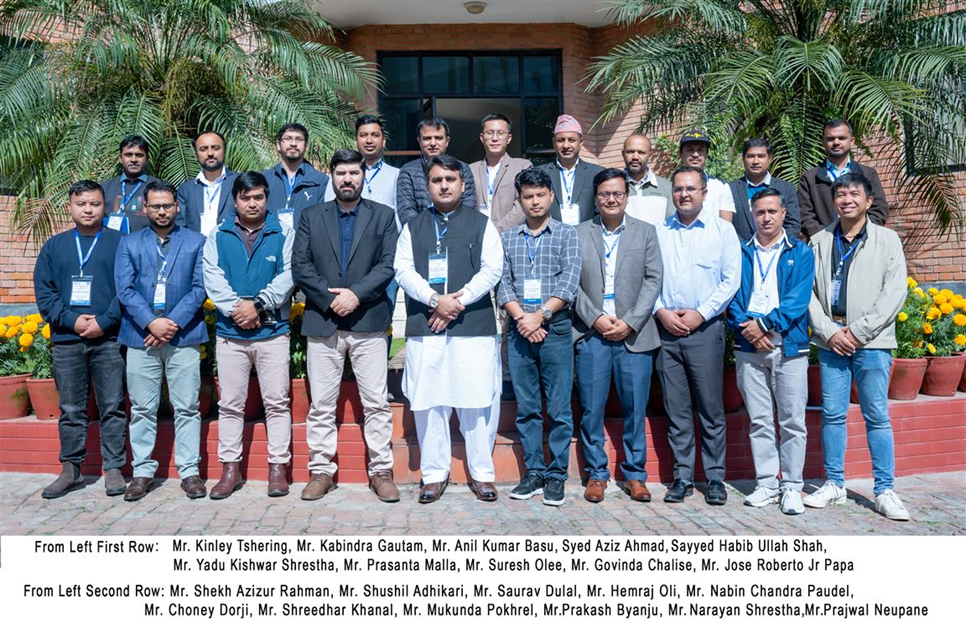
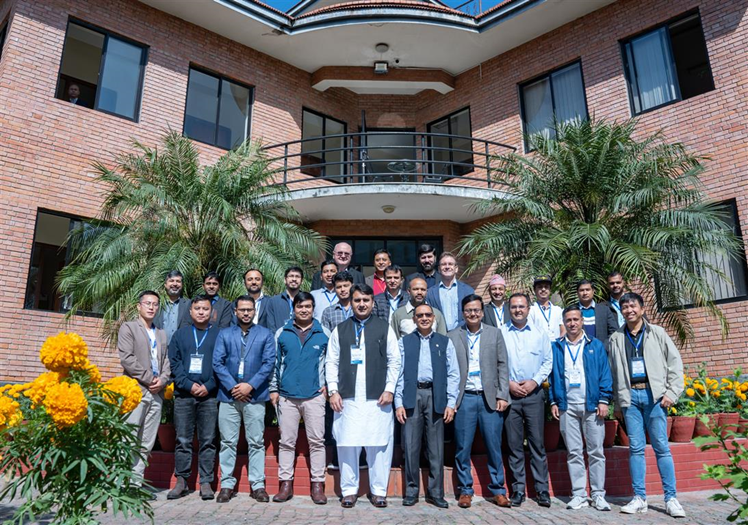
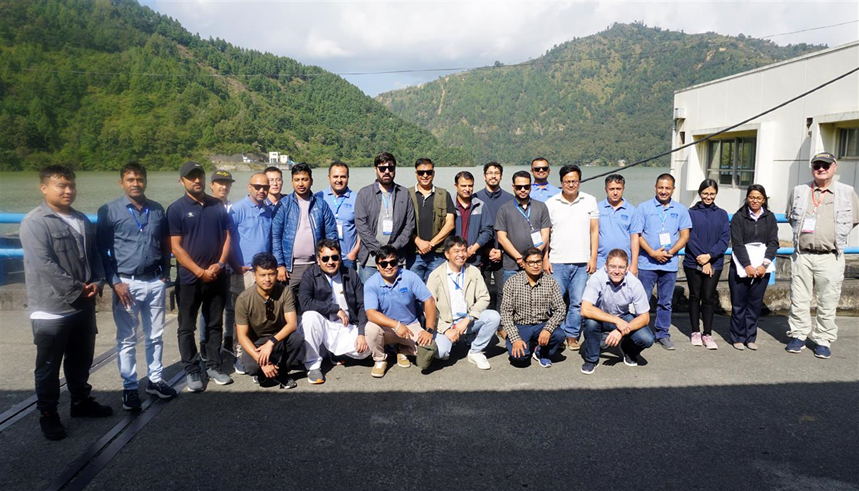
The workshop was attended by 21 participants from 4 different countries namely Bhutan, Nepal, Pakistan and Philippines. The participants were professionals from different governmental and private organizations including developers, consultants and researchers.
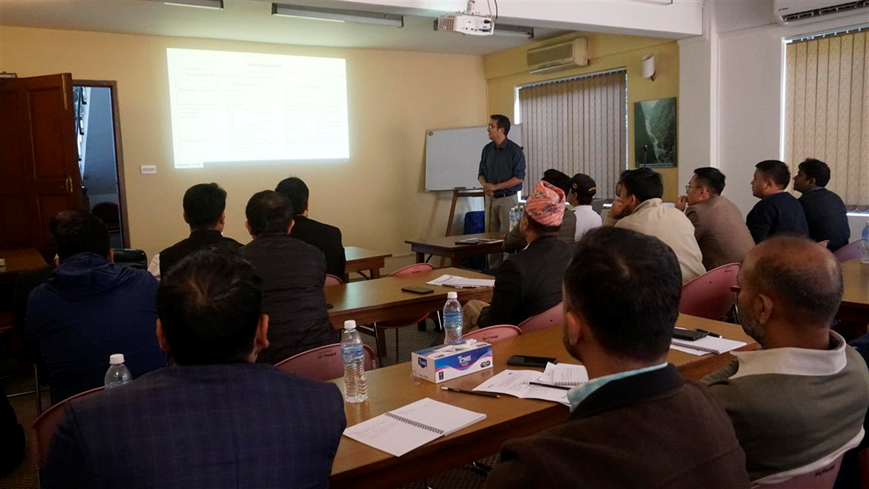
The weeklong workshop began with lectures conducted by the experienced professionals from academic institutions, hydropower developers, research organizations and consulting firms, who shared their experiences on various topics related to the main theme of the workshop. The participants were also given an opportunity to present and share their experience during group presentations. Hands on exercise by the participants was also the part of the training, where the participants have learned the application of RESCON after the lecture session
Following is the list of the lectures delivered during the workshop:
| Lecture 1: | Sediment transport and monitoring |
| Lecture 2: | Transport and deposition of sediments in a reservoir, monitoring and modelling |
| Lecture 3: | Sediment handling in reservoirs by: bypass, sluicing, venting, flushing, conventional dredging and excavation |
| Lecture 4: | Design paradigms and sediment management strategies in reservoirs |
| Lecture 5: | Sediment handling in small (peaking) reservoirs |
| Lecture 6: | Sediment handling in off-stream peaking reservoirs |
| Lecture 7: | Hydrosuction method for handling of sediments in reservoirs |
| Lecture 8: | Design of peaking reservoirs with in-stream settling basin |
| Lecture 9: | Adaptive sediment management strategies in existing reservoirs, case studies from Ambuklao / Binga / Kulekhani |
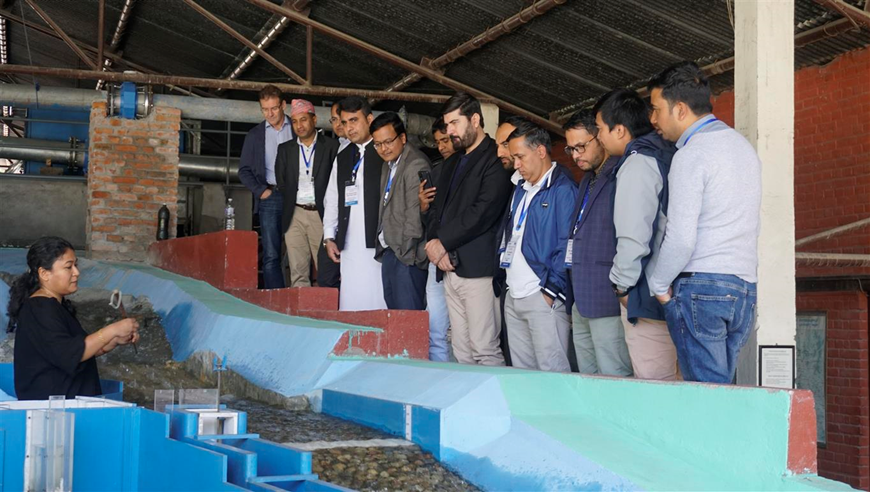
| Lecture 10: | Physical Modelling of reservoir projects: A case study from Hydro Lab |
| Lecture 11: | Assessment of sediment management strategies using RESCON |
Organisers: